

VitalSupplyMen
About Our Editorial Approach
We read labels and retail listings for natural supplements for men, explain them in plain English, and keep the tone in the everyday wellness lane.
What this site is, and what it isn't
VitalSupplyMen is an editorial resource about natural supplements for men, vitamins and minerals for men, and everyday wellness routines, written for readers in Indonesia. We don't sell products, we don't run a store, and we don't publish rankings. What we do is gather information from product labels and mainstream retail listings, explain it in plain language, and keep the tone in the everyday wellness lane rather than the medical one.
That distinction matters when you are standing in a pharmacy aisle or scrolling a marketplace with three tabs open. A listing can tell you what is inside a capsule and how many come in a pack. It usually can't tell you whether the formula suits the way you actually eat, train and sleep. So we write the second part down, category by category, and we say plainly when a source only shows part of the picture.
Who writes this site
The pages here are written by an editorial team that follows men's supplement categories in the Indonesian market: the products on Tokopedia and Lazada listings, the brands carried by Guardian and Watsons, and the imported labels that appear alongside them. We write in English because that's the language our readers use for cross-checking imported product information. We don't present ourselves as clinicians or as a testing lab.
Practically, that means the person writing a page has usually handled the pack, read the panel, and opened the same product on at least two marketplaces before a sentence gets written. When a formula is sold only through one channel, or only in a pack size that is hard to find, we mention it rather than smoothing it over. Our coverage leans toward men's vitamin formulas, energy and endurance blends, and the botanical ingredients that show up across both.
We are readers of this market, not participants in it. No one on the team takes payment from a brand, and no page here exists because a seller asked for it.

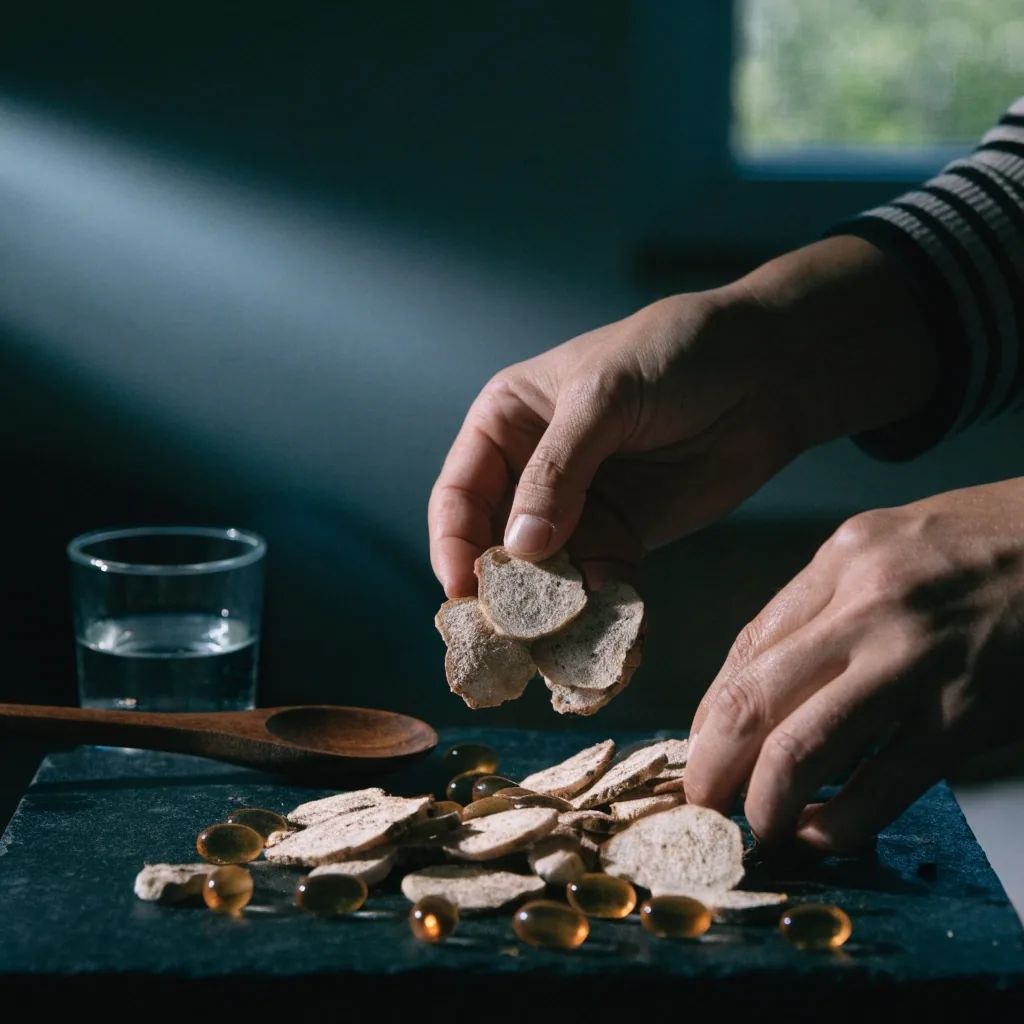
Formats How a formula is delivered shapes how it fits a routine, so we note it on every page.
How we gather product information
We read labels, product pages, and retailer listings. When a product appears in multiple places, we note the details that stay consistent and flag the ones that don't. If a listing shows a different pack size than the brand's own page, we say so. If a botanical dose is listed on one marketplace but missing on another, we describe what's visible rather than filling the gap with a guess.
This is slower than copying a description, and it is the part readers hardly see. Below is what the four steps actually look like, in the order we run them.
01 Read the physical label and note serving size, format and pack count
02 Open the brand page and at least one marketplace listing for the same item
03 Mark every detail that differs between the two sources instead of averaging them
04 Write the page and revisit it when a pack size or ingredient list changes
What we check against each other
- Ingredient names and their order on the panel, which usually hints at relative amounts
- Serving size and how many servings one pack realistically covers
- Format, whether the capsule is a softgel, a hard capsule, a tablet or a powder
- Storage notes and any instruction the label gives about when to take it
- How a retailer describes the product versus what the label actually states
How we handle claims
What we describe
Ingredients, format, pack size, and intended use are fair game. If a label lists a botanical alongside a mineral, both get named. If a formula comes in two pack counts, we say which one we are looking at.
What we leave out
Wording borrowed from clinical settings, and promises about fast body change. Some pages deliberately say less than a product listing does.
When brands push hard
We quote what the label says and keep it separate from what a supplement category can realistically do in a routine.
What we don't publish
That list is deliberate. It's the difference between an editorial resource and a storefront, and it's also the standard that keeps this site acceptable as a supplement-information destination on major ad platforms.
-
01
Invented ratings, reviews or testimonials
Every page stands on the label and the listing, not on a compliment someone wrote for a coupon.
-
02
Fabricated before-and-after stories
No staged transformation photos, no timelines borrowed from an ad. The pictures on this site show formats and tools, not outcomes.
-
03
Prices, promotions or affiliate offers
We don't know what a listing costs today and we don't want a stale number on a page that is meant to stay useful for months.
-
04
Certifications we can't verify from a label
If a badge isn't printed on the pack or stated on the brand's own page, it doesn't appear here as a fact.
The same four lines sit behind every page we publish.
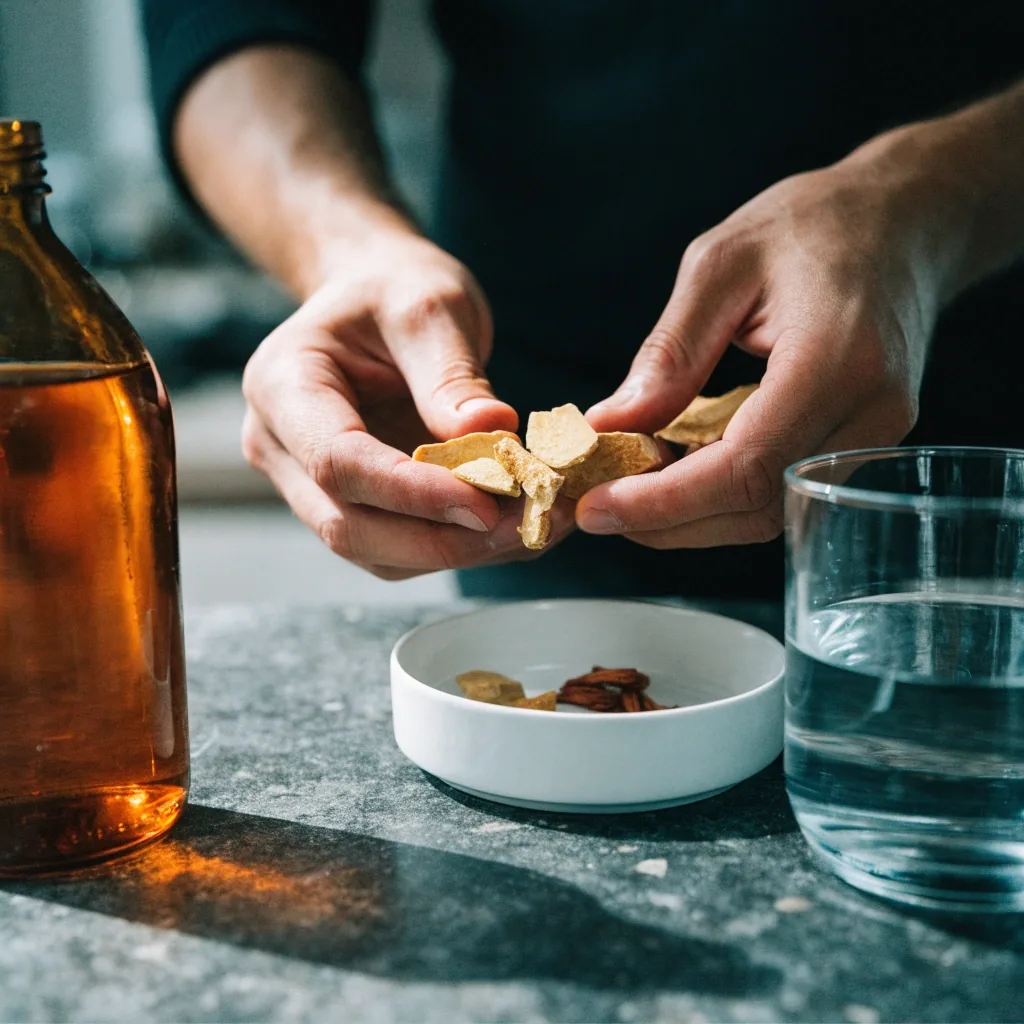
Routine Three bottles on a shelf is often the whole setup; the rest is timing and habit.
Corrections and updates
The Indonesian supplement market moves quickly: new pack sizes appear, listings change, brands add or drop botanicals. We update pages when we find a discrepancy or a change that affects what we've written. If you spot something that's out of date, the contact page is the fastest route. We read every note.
When a page is revised, the change is usually quiet, a corrected serving count or a renamed ingredient, rather than a rewritten article. If a product stops being sold through mainstream Indonesian retail and marketplace channels, we would rather remove the entry than leave a dead reference on the page. That keeps the coverage closer to what you can actually buy today.
You can reach us at the contact page, or by email at [email protected]. We answer during working hours, Monday to Friday.
The categories we cover
Our coverage runs across daily men's vitamin formulas, energy and endurance blends, botanical ingredients, product comparisons, and the routines that hold all of it together. Each category has its own page, so you don't have to read the whole site to find the part relevant to you. Start where your question is.
Editorial independence
We don't accept placements for products and we don't rank brands by commercial arrangement. If a product appears in our comparison pages, it's because it's visibly sold through mainstream Indonesian retail channels or prominent marketplace listings. That's the entire selection logic. Nothing else moves a product into or out of our coverage.
If coverage ever changes, it changes for a stated reason: the product left those channels, the label was reformulated, or a reader showed us a listing that contradicts what we wrote. Read the comparison pages knowing that, and you can judge the entries on the same information we had.
Our language choices
We use everyday wellness language on purpose. Words like support, routine, and formula fit the supplement category accurately. Words borrowed from clinical settings don't, even when the marketing around a product uses them. That's a stance, not a hedge. It's also why some pages on this site deliberately say less than a product listing does.
English is the working language here because imported labels and cross-border listings are usually written in it. When a term has no clean everyday equivalent, we describe it instead of reaching for a stricter word. That keeps a page readable for someone comparing formulas on a phone at a shelf, which is closer to how this site actually gets used than a quiet reading session at a desk.
Words we lean on
Plain words keep a label description honest. Borrowed clinical vocabulary tends to oversell what a capsule does.
How to use this site
Read the page that matches your question. Compare labels when you have two products in front of you. Treat any formula as one small part of a routine built on food, sleep, water, and movement. And if something on the page conflicts with a doctor's advice, the doctor wins. That's the whole editorial position, and it fits on a card.
- Start at the page that matches your question instead of reading the site end to end.
- Put two packs side by side and compare serving size before you compare anything else.
- Give a new formula a few weeks inside a steady routine before you judge how it sits.
- Tell us when a page is wrong. A screenshot of the listing is enough for us to check it.
Questions readers send us
These four come up most often. If yours isn't here, the editorial desk answers during working hours, Monday to Friday.
01 Do you sell the products you write about?
02 Where does the product information come from?
03 Can I send a formula for you to cover?
04 Why write in English for readers in Indonesia?
Where to go next
Pick the page that matches the question you actually have. Every route below is another chapter of the same editorial resource.