
Serving size
Capsules per serving, servings per bottle. This single line sets cost-per-day more than any claim on the front panel.
Chapters
Contact UsReach Us
Jl. Jenderal Sudirman No. 52, Jakarta 12190, Indonesia
Monday to Friday, 9:00 AM – 6:00 PM
Natural supplements for men — educational reading only, 2026.
VitalSupplyMen · Formula Guide
One bottle, one daily serving, a list of nutrients on the back. The label underneath is where the decisions live — serving size, nutrient forms, botanicals, capsule material.
The nutrient drawer
Before anything else, find how many capsules or tablets count as one serving. A 30-capsule pack in a one-per-day formula is roughly a month. A 120-capsule pack at two per day is two months. Menevit, for example, is sold in 30-capsule packs in Lazada Indonesia listings, while Naturelo's whole-food men's multivitamin comes in 120-capsule and 240-capsule formats. The count on the front of the bottle tells you more about cost-per-day than any marketing line.
Most men's formulas carry vitamin C, a B-complex group (B6, B12, folate, sometimes biotin), vitamin D3, and vitamin E. Vitamin D usually appears in IU, and standalone versions exist for men who want just that one nutrient. Naturelo's vegan vitamin D3, for instance, is listed at 2500 IU in the brand's men's collection. If your multivitamin already covers D, a separate bottle may be redundant.
Capsules per serving, servings per bottle. This single line sets cost-per-day more than any claim on the front panel.
Almost universal in men's vitamin formulas; appears in everyday foods as well, so the listing amount is worth comparing across bottles.
B6, B12, folate and sometimes biotin, usually listed together. They are grouped on labels because they tend to travel together in formulations.
Usually written in IU. Naturelo's vegan vitamin D3 is listed at 2500 IU in the brand's men's collection, which makes a separate D bottle redundant if your multivitamin already covers it.
Sits alongside C in most everyday formulas, often a modest amount by design because the formula relies on a spread of nutrients rather than one large hit.
Common in men's vitamin formulas. The form matters — zinc picolinate and zinc sulfate behave differently — and Indonesian labels do not always state which one is used.
Magnesium citrate and magnesium oxide behave differently in the body, so the salt name is more useful than the milligram figure on its own.
Listed in micrograms on most bottles, so it disappears quickly in the fine print. Worth noting that selenium also appears naturally in fish, eggs and Brazil nuts.
A small number on the label and easy to miss entirely when comparing two listings side by side. Like selenium, the amount is usually in micrograms.
One of the botanicals that appears frequently in men's formulas as part of a blend. The blend grouping on the label is usually where it hides.
Present in many men's health support blends, and almost always listed at a small amount rather than as the headline botanical.
NATURELINE Men's Health at Watsons lists Eurycoma longifolia radix extract at 50 mg alongside ginseng, epimedium and ginkgo. That dose is small and typically part of a blend.
The same drawer grammar turns up in every chapter of this guide. Once you can scan one drawer, you can scan any label that lands in your hand.
Format drawer
Zinc, magnesium, selenium and iodine are the minerals that show up most often in natural supplements for men. The form matters: magnesium citrate and magnesium oxide behave differently in the body, and zinc picolinate versus zinc sulfate is a similar story.
Labels in Indonesia don't always state the form, only the milligram amount. When the form is missing, treat the number as partial information rather than a verdict. This is one reason we suggest comparing two or three products side by side rather than trusting a single listing.
Format drawer · how it is taken
Everything concentrated into a single serving. Convenient, but it can mean a larger tablet to swallow.
Nutrients spread across two or three capsules through the day, which some men find easier on the stomach. The trade is more capsules to remember.
Sit between the two: usually oil-based, and often easier to swallow. A common format for standalone vitamin D3 and for botanical carriers.
Gelatin versus plant-based. Whole-food lines such as Naturelo's Whole Food Multivitamin for Men lean plant-based and vegan friendly.
Less common for men's multivitamins in Indonesia, but present in healthy lifestyle products that mix into water or food. Read the scoop size, not the stick count.
Format is the most personal part of the choice. It is worth picking the one you will actually take.
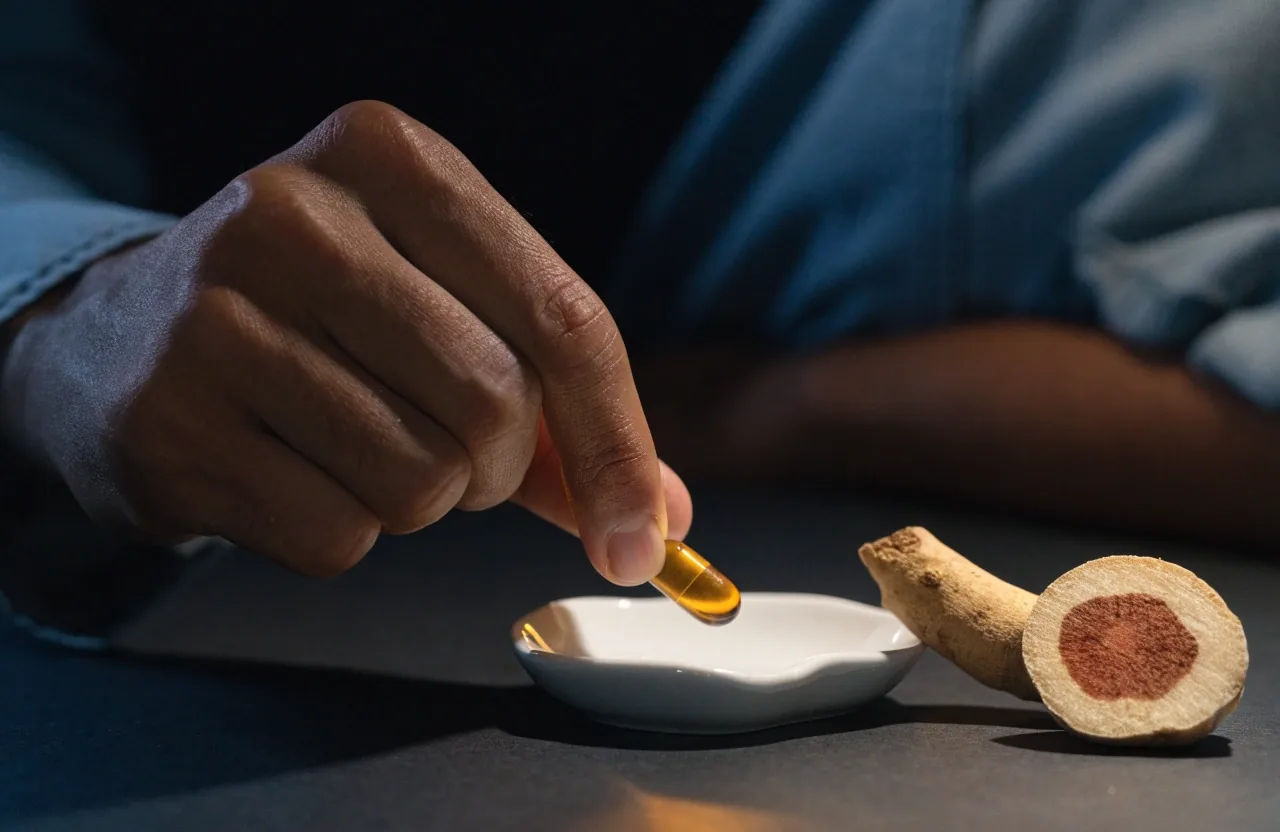
An opened amber softgel beside a root strip Photographed at table height, one cool side key, matte surface — the same grade used across every chapter of this guide.
Many men's formulas add plant extracts on top of the vitamin base. Maca, ginseng, Eurycoma longifolia (tongkat ali), epimedium and ginkgo show up frequently. NATURELINE Men's Health at Watsons, for example, lists Eurycoma longifolia radix extract at 50 mg alongside ginseng, epimedium and ginkgo. That dose is small, and it's typically presented as part of a blend rather than the headline. Knowing the number helps you calibrate expectations.
The blend grouping is the giveaway. When a label says "proprietary blend" and then lists the total milligrams, everything in that group shares one number. If you want to know how much of one botanical is really inside, a blend listing will not tell you — a separately dosed line will.
Some brands position themselves as whole-food or plant-based. Naturelo's Whole Food Multivitamin for Men sits in that lane, marketed as plant-based and vegan friendly and sold in the brand's men's section next to fish oil and algae DHA. Conventional formulas use isolated nutrient forms instead. Neither approach is automatically better. What matters is whether the label lists actual amounts and whether the format fits your day.
First read
A bottle that prints each nutrient amount in mg or IU lets you compare it to another bottle. A bottle that rounds everything into one blend figure leaves you comparing marketing copy rather than numbers. This is the single most useful sorting rule when you are standing in a store aisle.
Carrier
Usually starch or cellulose. Preferred in vegan-friendly lines.
Carrier
The older standard. Still common on Indonesian shelves and marketplace listings.
If a listing skips three of the five label points below, you can still buy the product — you are just working with less information than the bottle in your hand would give you.

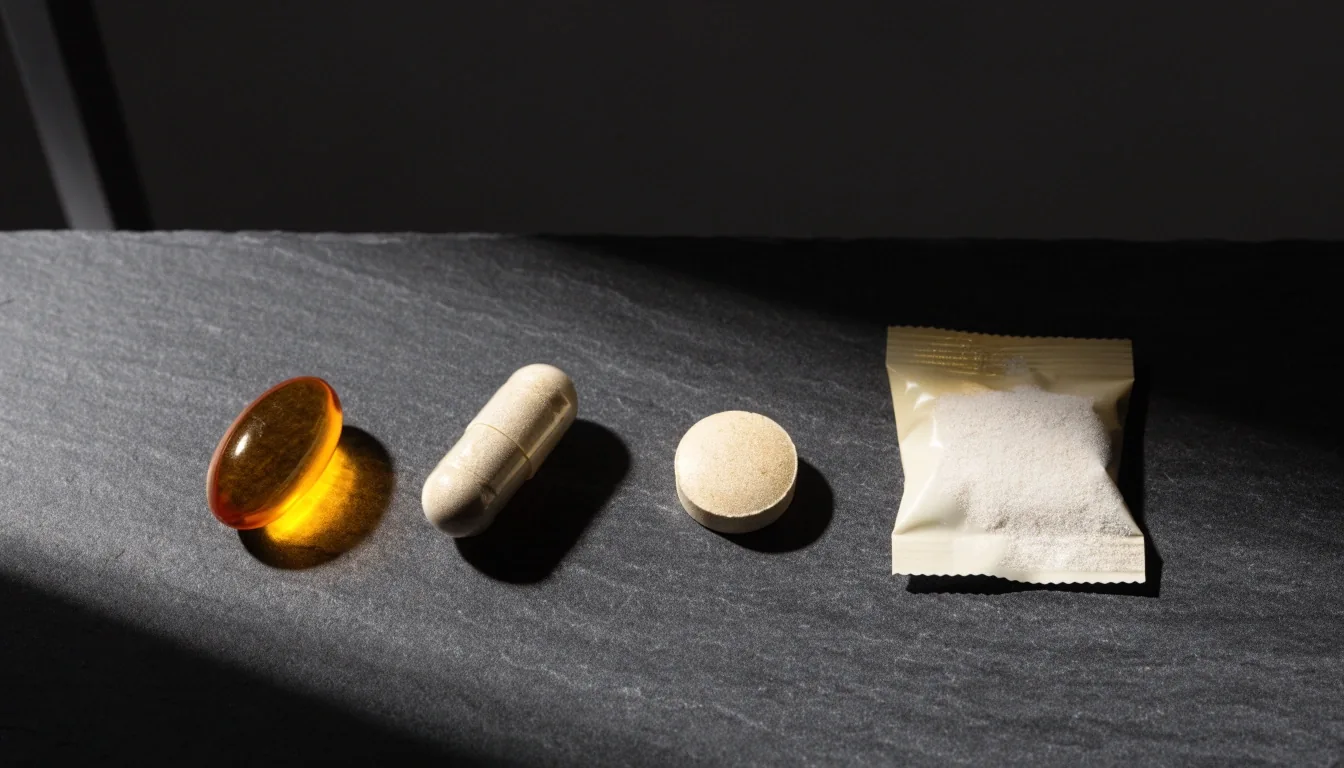
A shelf of everyday formats Three heights, one shelf, the same low-key grade that carries every chapter of this guide.
Brands segment by age for a reason: nutrient emphasis can shift as men get older. Naturelo One Daily Multivitamin for Men Over 50 is a separate formula in the same brand's Indonesian men's collection, available in 60-capsule and 120-capsule versions. If you're in that range, a formula designed for it may cover the nutrients that are more commonly discussed at that stage. Read both labels and compare.
A one-daily tablet concentrates everything into a single serving, which is convenient but can mean larger tablets. Split-dose formulas spread nutrients across two or three capsules, which some men find easier on the stomach. Softgels sit in between: they often carry oil-based nutrients and can be easier to swallow.
A practical way to decide: check which format you can take at the same time every day with a meal you already eat. If a formula needs a mid-afternoon dose and your afternoons move around, the format will quietly stop being used before the bottle runs out.
Label checklist
Five short checks. If a listing skips three of them, that's worth noticing.
The top of the panel. Tells you cost-per-day and how long the bottle lasts.
Check whether the mg or IU figure is per capsule or per serving — the two can differ by a factor.
A stated milligram amount beats a blend total you can only guess at.
Gelatin versus plant-based, usually stated on the side panel rather than the front.
Worth checking before you buy a bulk format. Heat and humidity shorten the useful life of any capsule.
A formula is only one part of a routine. Once you've picked one, the question becomes when you take it, with what food, and alongside what habits. That's covered in our daily routine guide. If you're still deciding between a multivitamin and a botanical blend, the energy and endurance page explains how those two categories differ.
If a listing has left you with a question we haven't answered — an unfamiliar nutrient name, an amount that reads strangely, or a comparison between two products on the same shelf — write to the editorial team. We answer with the same plain-language approach used across this guide.
That's a personal call. A varied diet covers a lot. A daily formula is often used to fill gaps when meals are inconsistent, travel is frequent, or specific nutrients are hard to get from food alone.
Whatever the label states. One-daily formulas exist alongside split-dose products. Follow the serving size on the bottle and don't stack multiple formulas without checking overlap.
They're usually small and presented as part of a blend. NATURELINE's Eurycoma longifolia radix extract, for example, is listed at 50 mg. Treat botanicals as supporting ingredients, not as the main function of the formula.